


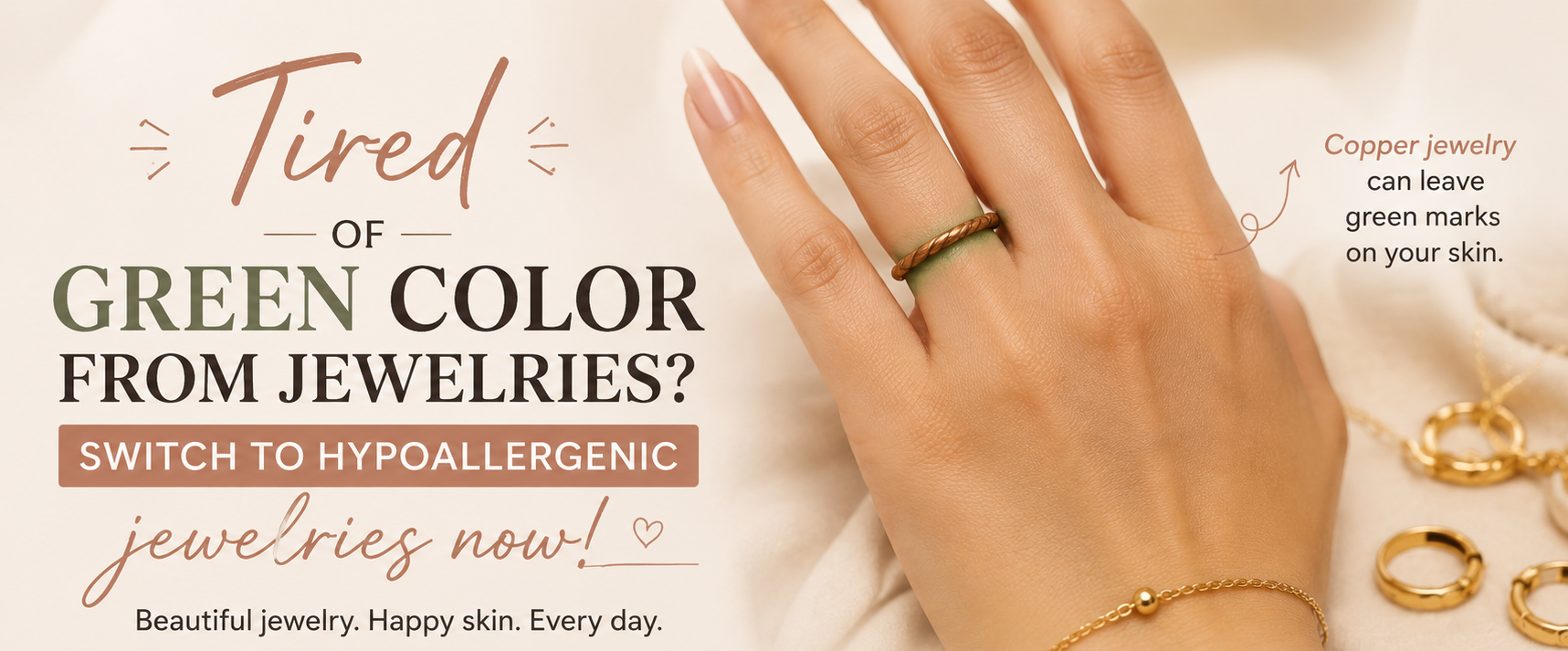
What is Hypoallergenic Jewelry?
Jewelry Shouldn’t Make Your Skin Itch, Turn Green or Break Out
Jewelry is supposed to be the finishing touch to an outfit.
But if you’ve ever worn a pair of earrings and ended up with itchy earlobes, put on a necklace and discovered a green mark around your neck, or worn a ring that left your skin red and irritated, you already know that not all jewelry is created equal.
The problem is often the metal used to make the jewelry.
Some inexpensive jewelry is made using base metals or alloys that can react with sweat, moisture and the skin. Others may contain metals such as nickel that can trigger irritation or allergic contact dermatitis in sensitive individuals.
And if you’re someone with sensitive skin, constantly experimenting with different metals can become frustrating.
So, what should you actually look for?
The short answer:
Choose hypoallergenic jewelry- made from durable, skin-friendly metals and 316L stainless steel is one of the best options for everyday jewelry.
Why Does Jewelry Irritate Your Skin?
There isn’t just one reason jewelry can cause a reaction.
Your skin may react because of:
- The metal used in the jewelry
- Nickel or other sensitizing metals
- Copper or brass-based alloys
- Sweat and moisture
- Friction between the jewelry and your skin
- Dirt or product buildup
- Tight-fitting jewelry
- A recently pierced or already irritated area
Nickel is particularly well known for causing allergic contact dermatitis, which can lead to itching, redness, rash and irritation. Jewelry—including earrings, necklaces, rings and bracelets—is a common source of nickel exposure.
This is why the material of your jewelry matters just as much as its design.
Why Does Jewelry Turn Your Skin Green?
Let’s address one of the most annoying jewelry problems: the mysterious green mark.
You take off your necklace and there it is.
A greenish ring around your neck.
Or you remove your ring and discover a green mark underneath it.
This usually happens because certain metals, particularly copper-containing alloys, can react with moisture, sweat and other substances on your skin.
The result is a greenish discoloration where the jewelry has been touching your skin.
It doesn’t necessarily mean something is wrong with your skin.
It usually means the metal is reacting with its environment.
This is one reason stainless-steel jewelry has become so popular for everyday wear.
What Is the Best Metal for Sensitive Skin?
If you’re looking for jewelry that is comfortable enough for everyday wear, the material should be one of your first considerations.
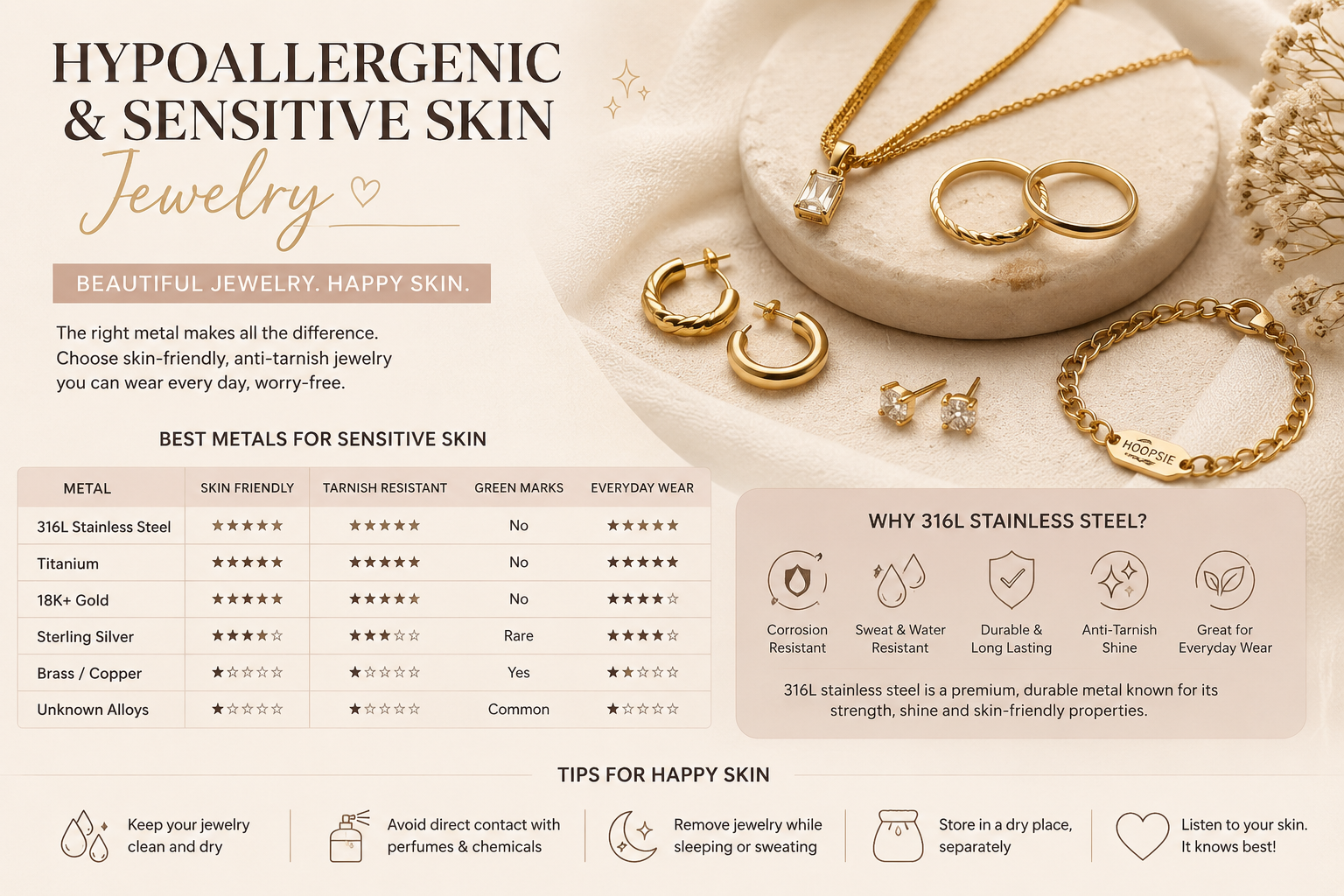
Here are some of the most commonly used jewelry metals and how they compare.
| Metal | Sensitive-skin friendly? | Tarnishing/green marks | Everyday wear |
|---|---|---|---|
| 316L Stainless Steel | ⭐⭐⭐⭐⭐ | Very resistant | ⭐⭐⭐⭐⭐ |
| Titanium | ⭐⭐⭐⭐⭐ | Very resistant | ⭐⭐⭐⭐⭐ |
| 18K+ Yellow Gold | ⭐⭐⭐⭐⭐ | Very resistant | ⭐⭐⭐⭐ |
| Sterling Silver | ⭐⭐⭐⭐ | Can tarnish | ⭐⭐⭐⭐ |
| Brass | ⭐⭐ | Can turn skin green | ⭐⭐⭐ |
| Copper | ⭐⭐ | Can turn skin green | ⭐⭐ |
| Unknown/Mystery Alloy | ⭐ | Highly variable | ⭐ |
Of course, individual skin sensitivity varies. But if you’re looking for affordable, durable jewelry for everyday use, stainless steel stands out as a particularly practical option.
 Why 316L Stainless Steel Is Great for Everyday Jewelry
You’ll often see jewelry brands describe their products as 316L stainless steel.
So what does that actually mean?
316L is a specific grade of stainless steel known for its corrosion resistance and durability.
Its composition includes chromium, nickel and molybdenum, with the standard composition range for 316L including approximately 16–18% chromium, 10–14% nickel and 2–3% molybdenum.
But don’t let the word “nickel” immediately scare you.
There’s an important difference between how much nickel an alloy contains and how much nickel it releases onto the skin.
Some stainless steels contain nickel but have a highly corrosion-resistant surface and release very little nickel under normal conditions. The Nickel Institute specifically notes that certain stainless steels containing nickel can have low nickel release and are used for prolonged skin contact.
That’s one of the reasons stainless steel is widely used for jewelry and other products that come into regular contact with the skin.
316L stainless steel is popular because it is:
- Durable
- Corrosion-resistant
- Resistant to everyday moisture
- Less prone to discoloration than copper/brass-based jewelry
- Suitable for everyday jewelry
- Easy to maintain
- Affordable compared with precious metals
And most importantly for jewelry lovers:
You don’t have to sacrifice style just because you have sensitive skin.
Is Stainless Steel Jewelry Safe for Sensitive Skin?
For most people, high-quality stainless steel jewelry can be an excellent choice for sensitive skin.
316L stainless steel is particularly popular for jewelry because of its durability and resistance to corrosion.
It is also a material commonly recommended in discussions around nickel-sensitive jewelry. The American Academy of Dermatology lists surgical-grade stainless steel among options that people with nickel allergy can consider, along with materials such as titanium, platinum and certain high-karat gold.
However, there is one important exception.
What if you have a confirmed nickel allergy?
This is where you should be more selective.
316L contains nickel, so it should not be described as a nickel-free metal.
If you already know that you have a confirmed nickel allergy, titanium, platinum or genuinely nickel-free jewelry may be a better choice depending on your individual sensitivity. If jewelry repeatedly causes a rash or irritation, a dermatologist can help determine whether nickel or another material is responsible.
For everyone else looking for a durable, anti-tarnish everyday jewelry option, 316L stainless steel is a very practical choice.
316L Stainless Steel vs Brass Jewelry
This is an especially useful comparison if you’ve previously experienced green skin from jewelry.
Brass
Brass is an alloy primarily made from copper and zinc.
It is inexpensive and easy to work with, which makes it common in fashion jewelry.
But copper-containing jewelry can sometimes react with sweat and moisture and leave greenish discoloration on the skin.
316L Stainless Steel
316L stainless steel is designed for much greater corrosion resistance.
Its chromium-rich composition helps create a protective passive surface, while molybdenum improves resistance to localized corrosion.
That makes it a much more practical choice for jewelry that you want to wear regularly.
If you’ve had enough of green necks, green fingers and jewelry that changes color after a few wears, stainless steel is worth considering.
What About Gold-Plated Jewelry?
Gold-plated jewelry can look beautiful, but there’s an important detail many people overlook:
The gold plating isn’t necessarily the entire piece.
Gold plating is a layer applied over another base metal.
If the plating wears down over time, the underlying metal may come into contact with your skin.
This is why two pieces that both look “gold” can behave very differently when worn regularly.
If you’re buying jewelry specifically because you want something durable, low-maintenance and suitable for everyday wear, looking at the base metal is just as important as looking at the color.
Best Jewelry for Sensitive Ears
Although sensitive skin isn’t limited to your ears, earrings deserve special attention.
Why?
Because the earring post passes through your piercing and stays in close contact with your skin for extended periods.
If your earrings constantly make your ears:
- Itch
- Turn red
- Feel sore
- Swell
- Develop a rash
…it may be time to reconsider the material you’re wearing.
For everyday earrings, 316L stainless steel is a popular choice because it combines durability, corrosion resistance and affordability.
This makes stainless steel hoops, studs, huggies and drop earrings particularly practical for people who don’t want to constantly remove their jewelry.
What Jewelry Is Best for Sensitive Skin?
The good news is that you don’t have to limit yourself to earrings.
The same principle applies to:
Earrings
Choose durable materials such as 316L stainless steel, titanium or suitable precious metals.
Necklaces
Look for corrosion-resistant metals, especially if you wear necklaces frequently and live in a hot or humid climate.
Rings
Rings have constant exposure to handwashing, sweat, skincare products and water, so durability matters.
Bracelets
Because bracelets experience a lot of friction and movement, a durable metal can make a noticeable difference.
In other words:
Sensitive-skin jewelry isn’t just about earrings. It’s about choosing better materials for everything that touches your skin.
Which Jewelry Metals Should You Avoid If You Have Sensitive Skin?
If you regularly experience irritation, it’s worth being cautious with jewelry made from unknown or poorly specified alloys.
Some people are particularly sensitive to nickel, while others may react to different metals or materials.
Common jewelry-related allergens can include nickel and, in some cases, metals such as cobalt.
If you’ve already identified a specific metal that triggers your reaction, avoiding that material is the most sensible approach.
And if you don’t know what’s causing your reaction?
Try switching to a well-established jewelry material such as 316L stainless steel or titanium and see whether your skin responds differently.
For persistent or severe reactions, consult a dermatologist rather than repeatedly testing different jewelry on irritated skin.
How to Make Your Jewelry More Skin-Friendly
Choosing the right metal is the biggest step, but a little jewelry care goes a long way too.
Keep your jewelry clean
Regularly wipe your pieces to remove sweat, oils, makeup and product buildup.
Keep skin folds dry
Moisture trapped underneath rings, bracelets or necklaces can contribute to irritation.
Remove jewelry if your skin becomes irritated
If a particular piece causes persistent itching or redness, take it off and allow your skin to recover.
Be careful with fresh piercings
Fresh piercings require appropriate aftercare. Don’t treat a healing piercing like an ordinary piece of jewelry.
Choose lightweight designs when possible
Heavy earrings can create additional pressure and friction on your earlobes.
So, Is 316L Stainless Steel a Good Choice for Sensitive Skin?
For most people, yes.
If you’re looking for jewelry that is:
✔ Durable
✔ Corrosion-resistant
✔ Low-maintenance
✔ Suitable for everyday wear
✔ Less likely to cause the green discoloration associated with copper/brass jewelry
✔ Affordable compared with precious metals
316L stainless steel is one of the best materials to consider.
It’s especially attractive for people who want to wear their favorite jewelry regularly instead of treating it like an occasional accessory.
And that’s exactly why stainless steel has become such a popular material for modern everyday jewelry.
Sensitive Skin Doesn’t Mean You Have to Stop Wearing Jewelry
Having sensitive skin shouldn’t mean giving up the jewelry you love.
You can still wear:
Hoops. Rings. Necklaces. Bracelets. Huggies. Studs. Layered chains. Everyday pieces.
The difference is simply choosing your materials more carefully.
Instead of buying jewelry based only on how it looks, pay attention to what it’s made from.
And if you’re tired of earrings that make your ears itch or necklaces that leave green marks on your skin, 316L stainless steel is a great place to start.
It’s durable, stylish, low-maintenance and designed for the kind of everyday wear modern jewelry lovers actually want.
Because your jewelry should complement your skin—not fight with it.
FAQs About Hypoallergenic & Sensitive Skin Jewelry
What is the best jewelry for sensitive skin?
316L stainless steel and titanium are popular choices for everyday jewelry because they are durable and corrosion-resistant. Certain high-karat gold and platinum pieces can also be suitable.
Is 316L stainless steel good for sensitive skin?
Yes. 316L stainless steel is a popular material for everyday jewelry because of its durability and corrosion resistance. However, 316L contains nickel, so people with a confirmed nickel allergy should consider their individual sensitivity and may prefer nickel-free alternatives.
Does stainless steel jewelry turn your skin green?
316L stainless steel is much less likely to cause the green discoloration commonly associated with copper-containing jewelry. This is one of its advantages as an everyday jewelry material.
What jewelry won’t turn your skin green?
Jewelry made from corrosion-resistant materials such as stainless steel or titanium is generally a better choice if you want to avoid the green discoloration associated with copper-containing alloys.
Are stainless steel earrings good for sensitive ears?
They can be. 316L stainless steel earrings are a popular option because of their durability and corrosion resistance. If you have a diagnosed nickel allergy, however, consider nickel-free alternatives such as titanium.
Are nickel-free earrings better for sensitive ears?
If you have a confirmed nickel allergy, nickel-free earrings can be a useful option. If you simply have generally sensitive skin, you may find that high-quality stainless steel jewelry works perfectly well for you.
Why does cheap jewelry turn my skin green?
Copper-containing metals and alloys can react with moisture, sweat and substances on your skin, producing greenish compounds on the surface of your skin.
Can I wear stainless steel jewelry every day?
Yes. One of the biggest advantages of stainless steel jewelry is its durability and resistance to corrosion, which makes it particularly suitable for everyday wear.